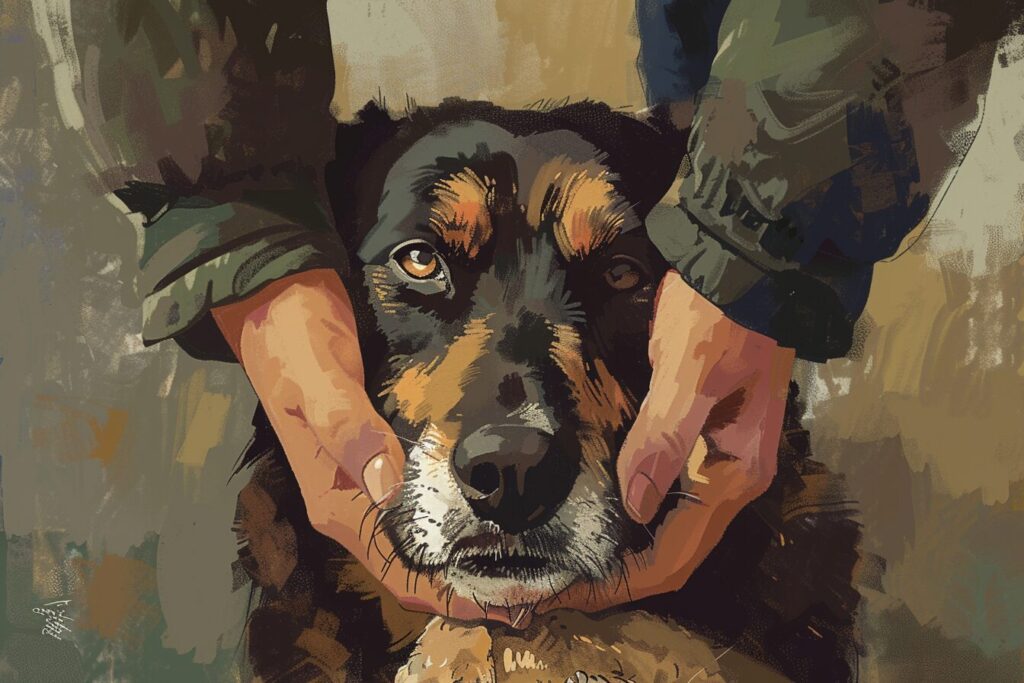
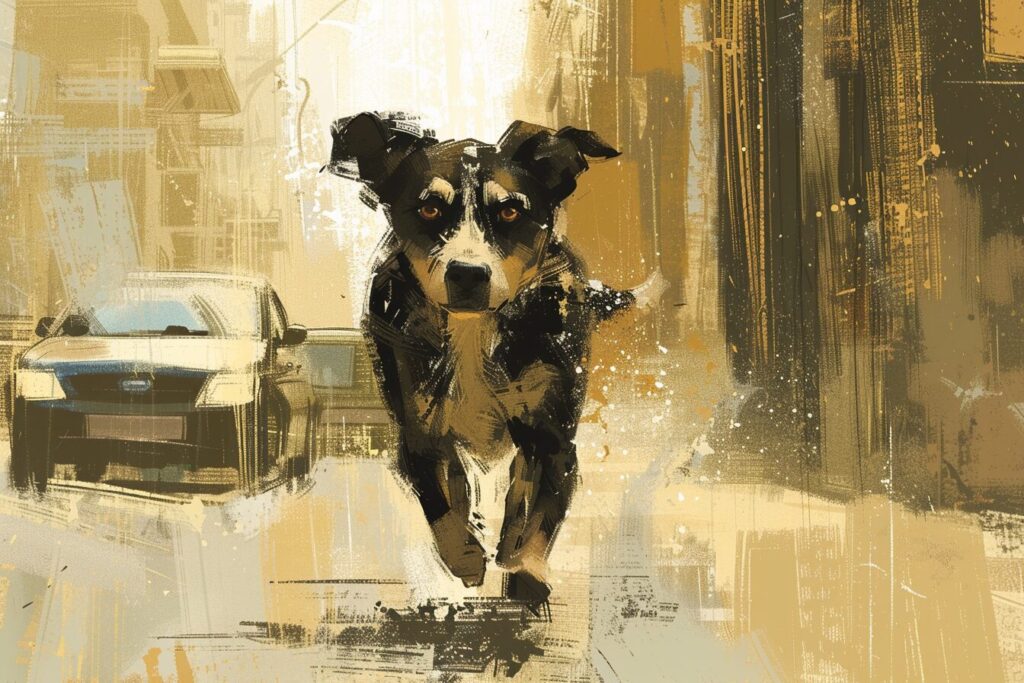
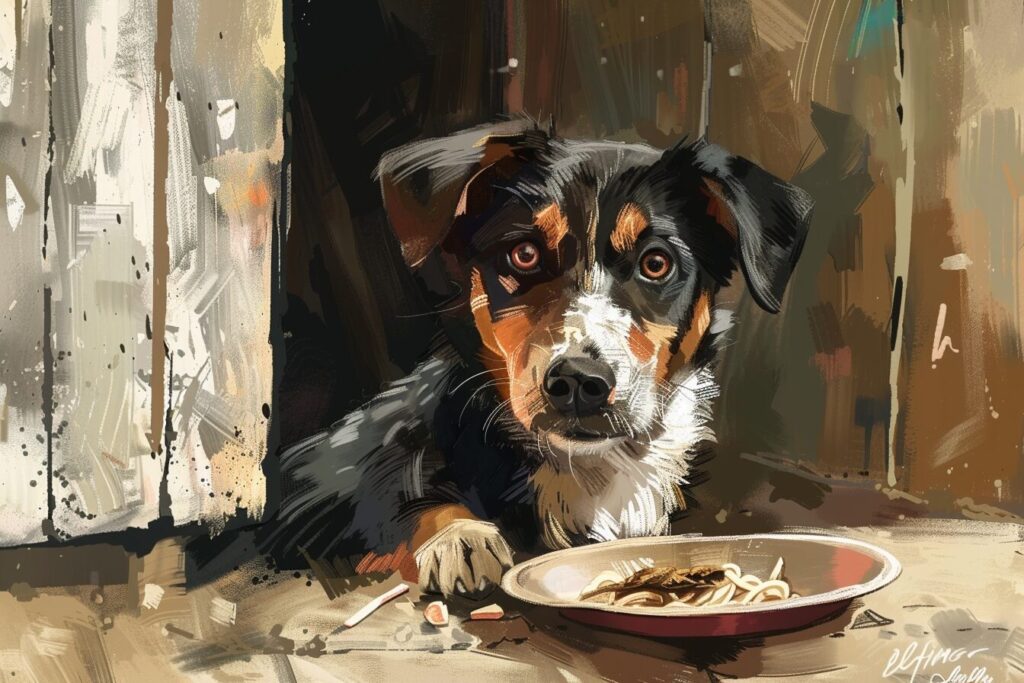
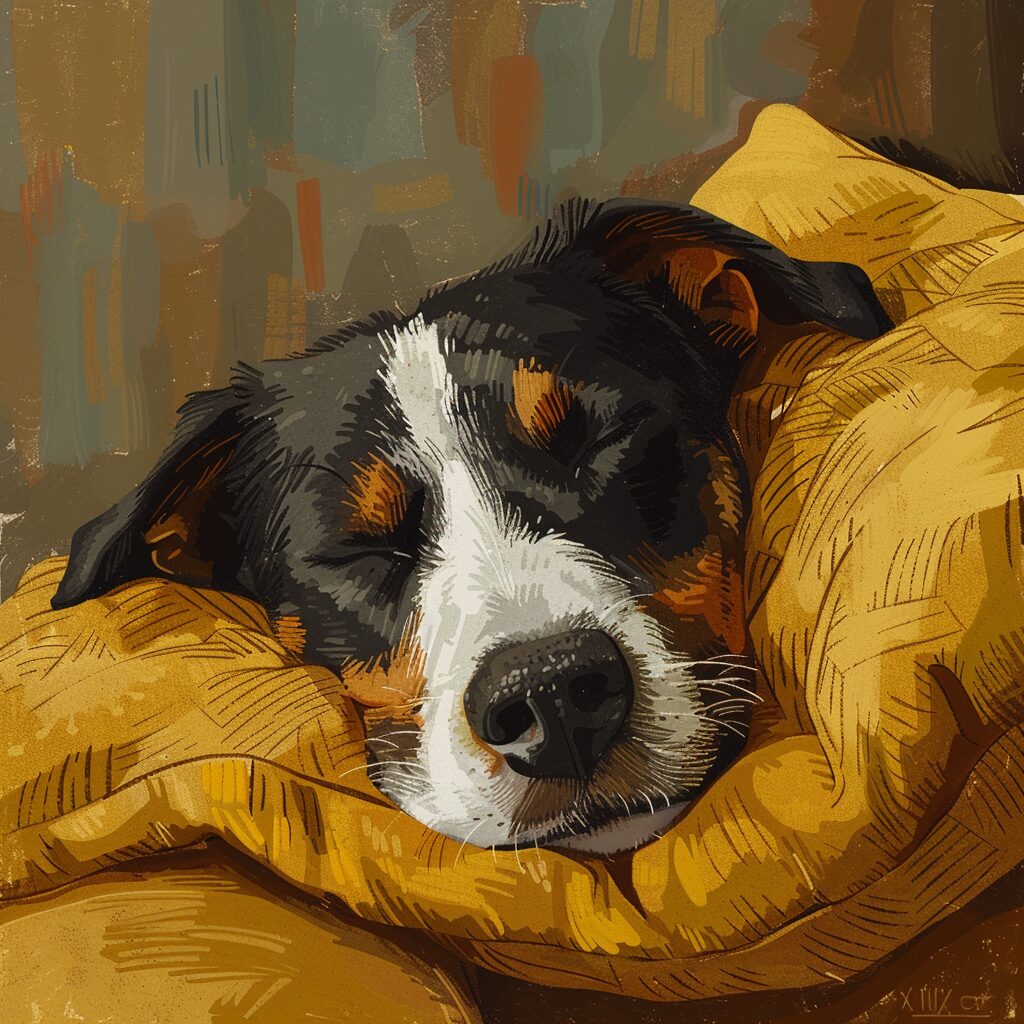
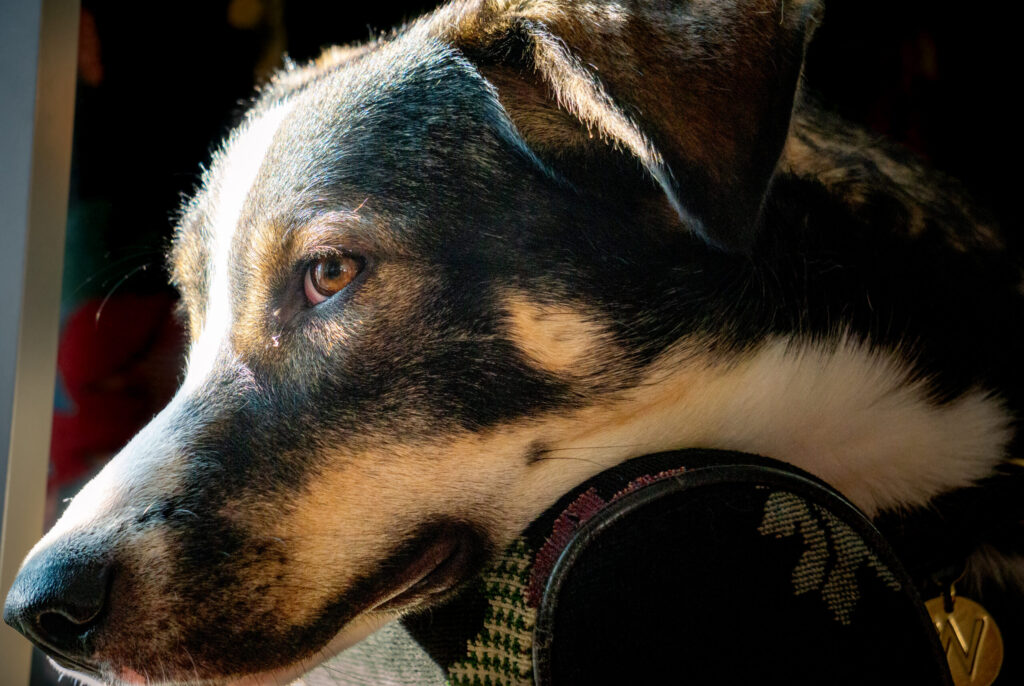
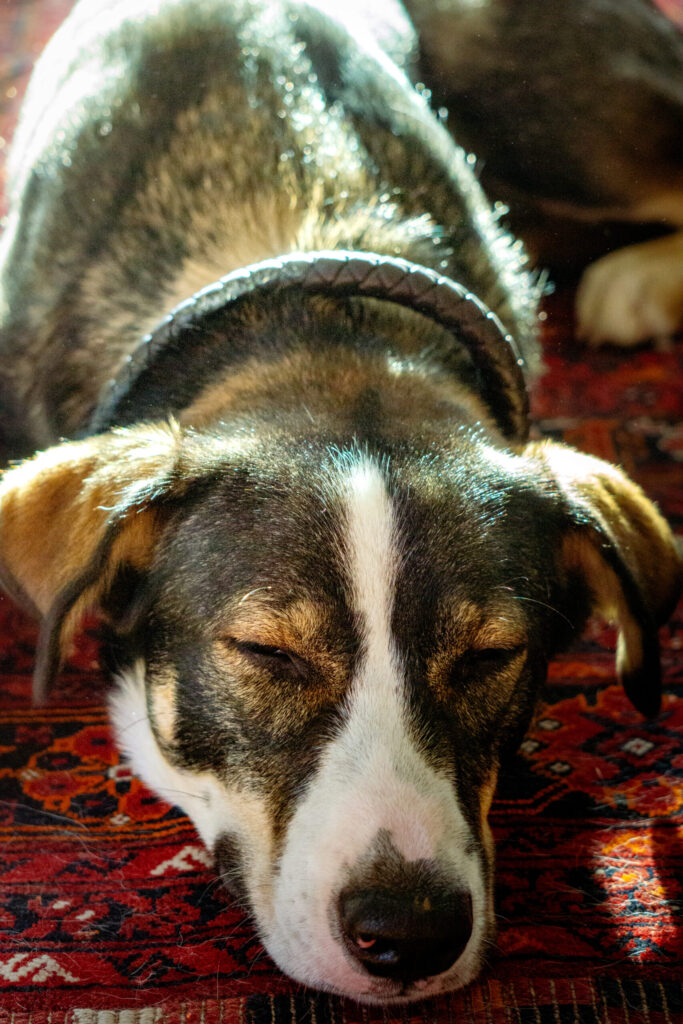
We experimented – and you shared your opinion. The overall sentiment is clear: You preferred the article featuring Gustavo’s real photos over the version with AI-generated images. Among the reasons most of oyu mentioned were credibility, journalistic integrity, and your ability to emotionally connect with Gustavo and the Moroccan street dogs in general. This gives us valuable insight into how people evaluate visual content and how they respond to AI-generated images.
At the same time, we need to look at our own experiment critically. We deliberately chose a rather artistic AI style intended to evoke a warm, comforting feeling – like a beautiful story from a children’s book. This naturally created a strong contrast to the real photographs. Would your opinions have been less unanimous if we had generated images that were nearly indistinguishable from real photos? What if we had not disclosed which images were AI-generated and which were real? It is also possible that a generally more critical attitude toward AI images influenced the evaluation once the images were clearly labeled as such. There is therefore still room for a future experiment in which the distinction is not made obvious.
AI and Credibility: How Real Photos Create Trust
AI and digital platforms are indeed in the process of transforming our information ecosystem. On the one hand, they can increase the efficiency of information dissemination while simultaneously reducing the cost of content production – for our images in the style of children’s storybook, for example, we did not have to pay any real artists. AI-generated content can therefore be produced in large quantities, very quickly, and at very low cost.
At the same time, however, the relative amount of unverified or unreliable information increases as long as there are no clear mechanisms for quality control and regulation. Without labeling or quality assurance, public uncertainty about what is real and what is not also grows. The average quality of information products may decline, even as the overall volume of information increases – and the risk of misinformation rises.
You intuitively recognized this: real photos function as a quality signal for you, as visual evidence that a described event actually took place, that a depicted problem truly exists, and that the main character of our story exists at all. The use of (clearly recognizable) AI-generated images can therefore even contribute to a loss of credibility for the entire article – because if the photos are not real, what guarantees that the information itself is accurate? In a world in which AI images are becoming increasingly realistic, this trust cue – the confidence an image creates – becomes especially important.
AI and Emotional Connection: How Real Photos Evoke Empathy
Another key experience many of you described was how strongly the real photos of Gustavo allowed you to gain a “genuine glimpse into his life.” This made it easier for you to identify with his story. AI-generated images, by contrast, may be technically sophisticated, but they remain abstract and generic – they do not convey something that feels genuinely human.
This perception cannot be explained only in psychosocial terms. It also has social and cognitive foundations. Studies show that people perceive emotional signals in images more strongly when they believe those images document real situations – not merely as illustrations, but as evidence of an actual event. AI-generated images, on the other hand, are often perceived as aesthetically pleasing, but not as representations of a real lived experience.
AI Does Not Increase the Journalistic Value of an Article
Our experiment shows what research also suggests: at present, AI-generated images are not capable of producing the same impact as real photographs – at least when their AI-generated origin is recognizable. Real photos establish a connection to reality that AI cannot currently replace, and they move viewers on a deeper emotional level. At the same time, the growing use of AI-generated content also increases the risk of misinformation.
Many countries have stray dogs — Morocco is no exception. Their situation is often precarious, and in the run-up to the 2030 World Cup, it is becoming increasingly dangerous.
“Beldi is best” — anyone who has spent even a short amount of time engaging with dogs in Morocco has likely come across this belief. But what exactly is a Beldi — and what role do stray dogs actually play in Moroccan society?
In Moroccan Arabic, Beldi means “from the countryside,” “native,” “belonging to the country.” They are often mixed-breed dogs that exhibit traits of local breeds such as the Sloughi, a Moroccan sighthound, and the Aidi, a herding dog from the Atlas Mountains. But characteristics of other breeds will also frequently be found in Beldis — especially of German Shepherds and Huskies, breeds that are particularly popular in Morocco as pets because of their wolf-like appearance.
Among dog lovers, the Beldi is considered especially resilient and loyal. Yet, although the Beldi is the Moroccan dog par excellence, and its very name marks it as native to the country, this sense of belonging is hardly reflected in Morocco’s cityscapes. For example, in the coastal city of Tangier alone, there are over 30,000 homeless Beldis. And even though many Moroccans appreciate stray dogs and even feed and care for them, life on the streets is still harsh for many — marked by disease and violence, including violence from humans.
A particularly big threat plays an increasingly important role in the lives of the Beldis: humans. Especially dangerous for the furry friends? Moroccan authorities tasked with preparing city streets for the 2030 World Cup. What is behind this?
This is the question we want to explore in our new article — while also examining a completely different topic at the same time. The piece will be published in two versions: one with photographs we took ourselves, and one visually supported by AI-generated images created with Midjourney. The goal? We want to hear your opinion on an issue that is becoming increasingly relevant: Should journalistic work use AI-generated images to visually represent its content? Where could AI visuals enrich journalism — and where might they cross a line?
Take a look at both posts and join the discussion!
Find the post with AI-generated images here. And find the post with our own photography here.
Click here for the version with our own photography.
Morocco’s Stray Dogs at Risk Ahead of the 2030 World Cup
It is a cold afternoon in the middle of November, the sun is shining in a small beach town near the Moroccan metropolis of Casablanca — but for Chiara, it is a sad day. She witnessed Moroccan authorities throw a black stray dog and one of her puppies into a vehicle and take them to an unknown location. Chiara knew this dog and had considered her a friend — for months, she had accompanied Chiara, her partner, and their own dogs on countless walks along the beach. At some point, she had even begun bringing her puppies along. Originally, there had been seven of them – but only two had survived the harsh conditions on Morocco’s streets.
Now the fate of the mother dog and her puppy is uncertain. Most likely, they are just two among many that have disappeared — as Morocco plans to rid its streets of the country‘s street dogs by the 2030 World Cup. Morocco wants its cities to look clean and tidy for the expected visitors when Morocco hosts this major sporting event together with Spain and Portugal — for the first time in the country’s history. A PR dream come true for the Moroccan king, but a nightmare for Morocco’s dogs.
It is especially the brutality and disregard with which the authorities are acting that animal rights activists criticize. Like Chiara: She is originally a PhD student from Italy and lives in Morocco to conduct research for her dissertation — but she has also taken it upon herself to care for some of the many stray dogs she finds on every corner. Under the handle @mymoroccanrescuedog, she created an Instagram account to place the few dogs she can rescue with families. She collects donations on GoFundMe, too as the costs of preparing a dog for adoption are substantial. But she still covers most of the expenses herself — veterinary check-ups, vaccinations, neutering, food, and preparations for a journey to Europe once a dog has found a new family.
Moroccan Animal Shelters — Between Compassion and Burnout
Animal shelters, of course, are found in Morocco as well, but they face countless challenges, the biggest of them being the sheer amount of animals in need of help: as a result, most Moroccan shelters are overcrowded. Most dogs are never adopted, and resources and money are tight, everywhere, all the time. It is a daily struggle for survival – and there is next to no governmental support.
Officially, Morocco has introduced a management system for the Beldis, as mixed stray dogs are often called: Trap, Neuter, Vaccinate, Return (TNVR) is the name of the program Morocco has been running since 2019 — a humane model whose effectiveness is undisputed worldwide. It is proven to not not only help control populations but also to reduce the risk of rabies – because in Morocco, people still die of rabies every year, including, in 2025, a British tourist who was scratched by a puppy while on vacation. In 2024, according to official reports, 33 people died of rabies in Morocco. Each year, around 100,000 bites from stray dogs are recorded. 40% of them involve children under the age of 15.
However, even though plans exist to open TNVR facilities in at least 14 cities across the country, only a single facility is currently operating under this model — in Al Arjat, near the Moroccan capital Rabat. Around 500 dogs have already been successfully treated and released there. Over the past five years, Morocco says it has invested around 23 million US dollars in animal control centers and programs. Nevertheless, it has not managed yet to achieve success at a larger level.
Sanctioned by the government: Morocco’s “Clean-Up Mission”
Some even suspect that these measures may merely be a façade. Animal welfare organizations such as PETA, the International Animal Welfare and Protection Coalition, and Dogs Trust continue to accuse Moroccan authorities of the targeted, large-scale killing of stray dogs. Citing unspecified sources, they claim Morocco plans to eliminate up to three million stray dogs until 2030 — particularly in those cities where stadiums for the World Cup are to be built.
So far, the Moroccan government has rejected these accusations as unfounded. In fact, a bill is expected to be passed that would impose fines of up to 1,500 US dollars or even prison sentences of up to three months onto anyone who causes suffering to stray dogs or kills them. CNN spoke about this topic with Omar Jaïd from the tourism board of the mountain town Ifrane, who admits that Morocco wants to “clean” the streets of stray dogs by the 2030 World Cup. However, he claims, this is being done exclusively by way of targeted veterinary programs such as TNVR.
Witness accounts and videos on social media showing the opposite continue to rear their ugly heads however. And for many Moroccans, dead stray dogs are an all-too-familiar sight. Witnesses report that the killings are said to have increased markedly since 2024. Some even speak of armed men roaming the streets at night and shooting stray dogs. This is also reported by the International Animal Welfare Protection Coalition (IAWPC). Others, according to the IAWPC, are captured — likely like the black dog Chiara met on the beach — and deliberately poisoned.
A coalition of 10 animal welfare organizations has demanded a statement from FIFA in February 2025 — and even the late behaviorist and environmental activist JaneGoodall expressed her shock in a letter to FIFA about Morocco’s actions against stray dogs in connection with the World Cup. So far, however, such efforts to gain FIFA’s attention have yielded no results.
Gustavo — A Success Story
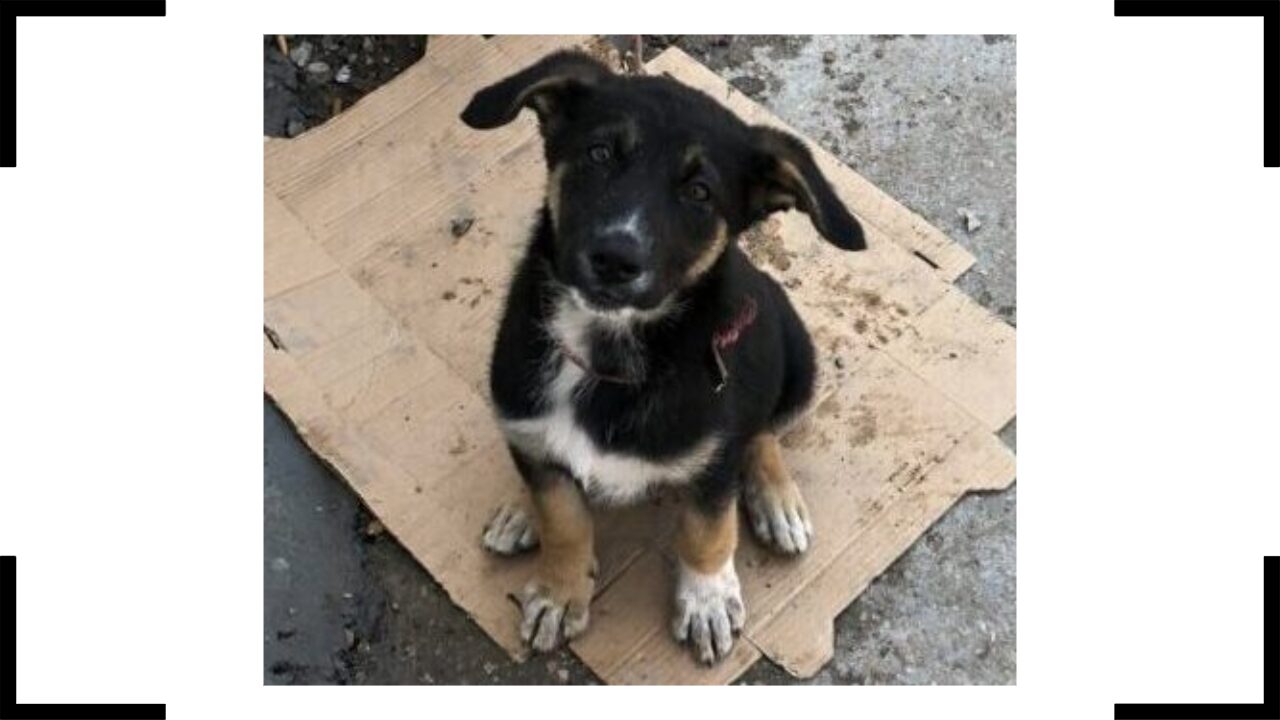
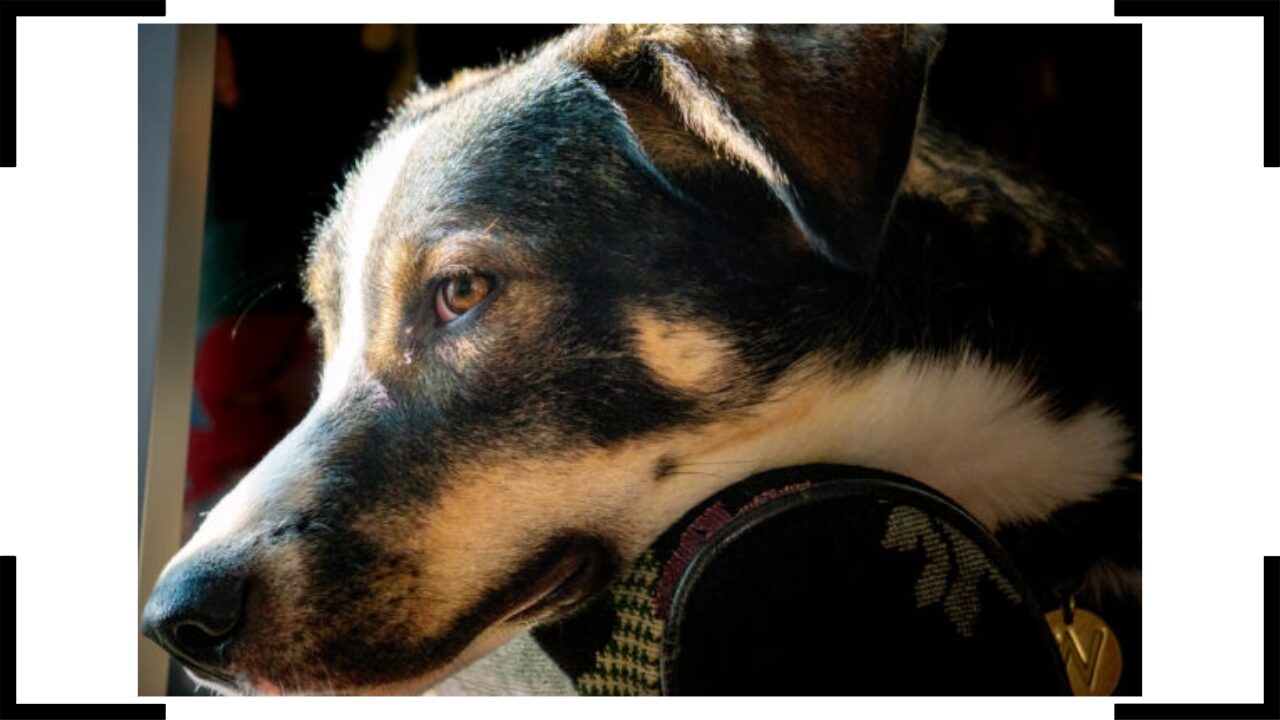
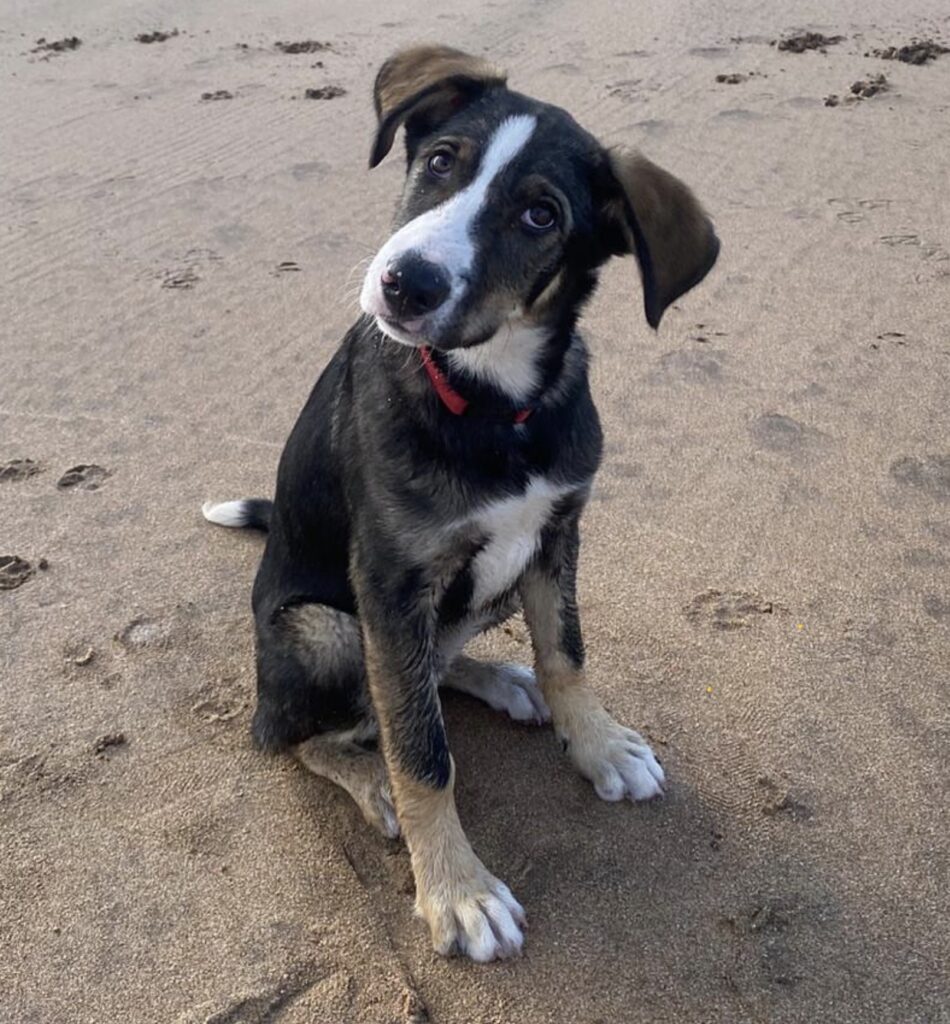
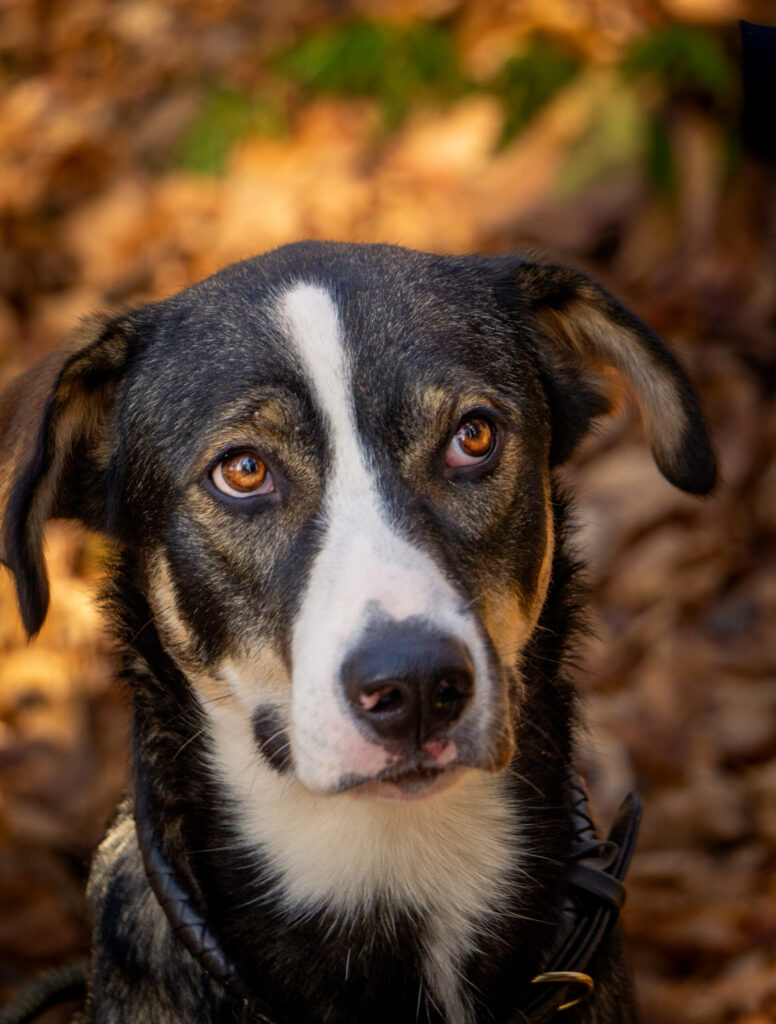
One dog who made it, thanks to Chiara’s efforts, is Gustavo. A lanky young animal with dark fur and a white nose and white tail tip, whose birthday Chiara places sometime in January. His paw pads are pink. Whenever there is a loud noise, he flinches and squeals anxiously. Chiara rescued him from a park in Casablanca when he was about three months old. As a puppy on the city‘s busy streets, he would not have stood a chance otherwise. Early videos show him eating old noodles from a cardboard plate, alone in a rundown building on the outskirts of the city.
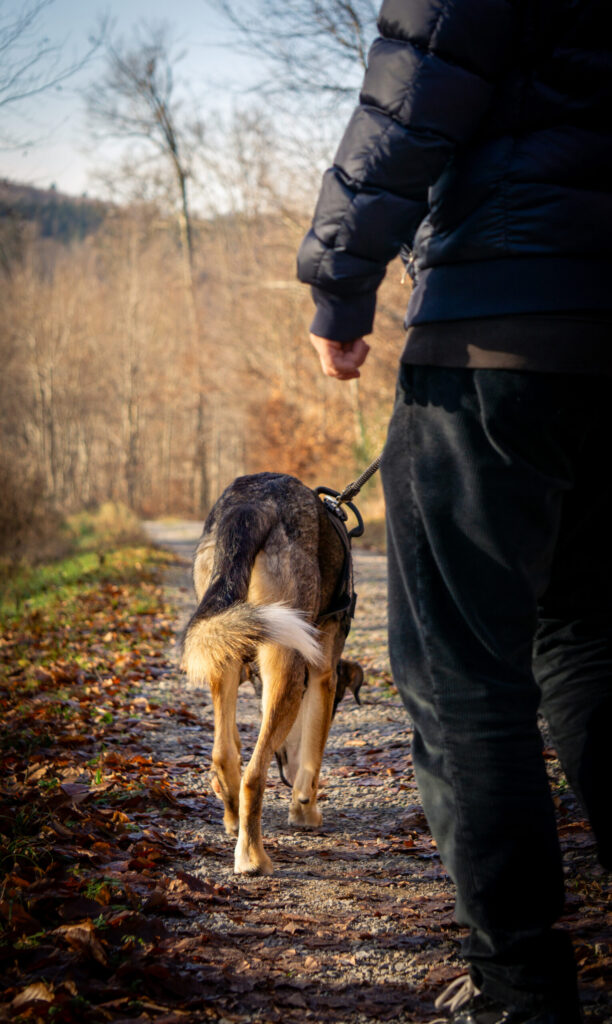
For a month now, he has been living in Germany, in Berlin. He especially loves his thick rope toy to play with, a deer antler to chew, his soft bed — and the snow in this cold winter — something he had never experienced before during his short life on the beach in Morocco.
But on the streets of Morocco, the suffering continues.
Have a look at these links to stay up to date about the topic:
CNN (Jun 2025): Why is Morocco killing thousands of stray dogs ahead of the 2030 World Cup? https://edition.cnn.com/2025/06/20/sport/morocco-stray-dogs-2030-world-cup-spt
Morocco World News (Feb 2025): Moroccan Official Denies Reports of Mass Culling of Stray Dogs https://www.moroccoworldnews.com/2025/02/171348/moroccan-official-denies-reports-of-mass-culling-of-stray-dogs/
PETA Deutschland: WM 2030 in Marokko: Qualvolle Hunde- und Katzentötung stoppen! https://www.peta.de/aktiv/wm-2030-marokko-petition
(IAWPC-Kampagnenbezug über Pressemitteilung): Morocco’s proposed animal welfare law must end World Cup mass dog killings https://pressat.co.uk/releases/moroccos-proposed-animal-welfare-law-must-end-world-cup-mass-dog-killings-say-global-campaigners-9700fd04739ab4d9f756c1501c44860d
Click here for the version with AI-generated images.
Morocco’s Stray Dogs at Risk Ahead of the 2030 World Cup
It is a cold afternoon in the middle of November, the sun is shining in a small beach town near the Moroccan metropolis of Casablanca — but for Chiara, it is a sad day. She witnessed Moroccan authorities throw a black stray dog and one of her puppies into a vehicle and take them to an unknown location. Chiara knew this dog and had considered her a friend — for months, she had accompanied Chiara, her partner, and their own dogs on countless walks along the beach. At some point, she had even begun bringing her puppies along. Originally, there had been seven of them – but only two had survived the harsh conditions on Morocco’s streets.
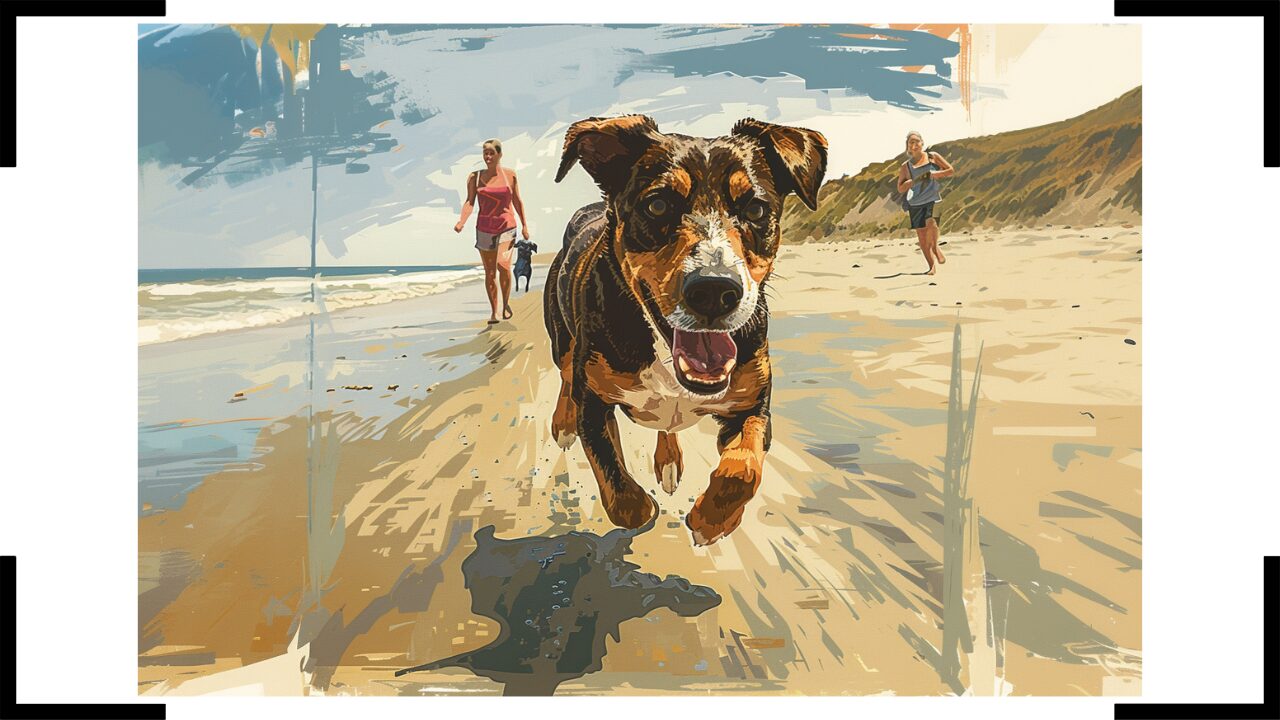
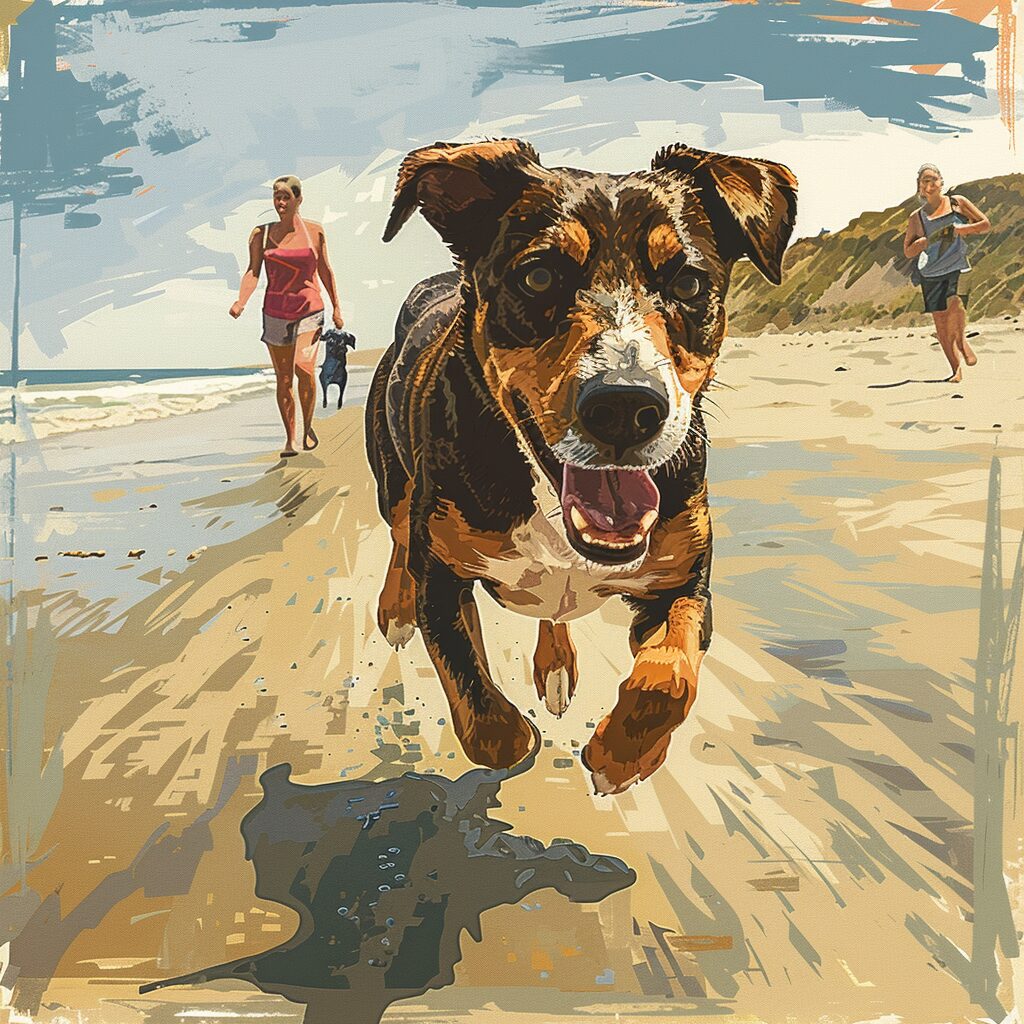
A former young stray dog on the beach near Casablanca
Now the fate of the mother dog and her puppy is uncertain. Most likely, they are just two among many that have disappeared — as Morocco plans to rid its streets of the country‘s street dogs by the 2030 World Cup. Morocco wants its cities to look clean and tidy for the expected visitors when Morocco hosts this major sporting event together with Spain and Portugal — for the first time in the country’s history. A PR dream come true for the Moroccan king, but a nightmare for Morocco’s dogs.
It is especially the brutality and disregard with which the authorities are acting that animal rights activists criticize. Like Chiara: She is originally a PhD student from Italy and lives in Morocco to conduct research for her dissertation — but she has also taken it upon herself to care for some of the many stray dogs she finds on every corner. Under the handle @mymoroccanrescuedog, she created an Instagram account to place the few dogs she can rescue with families. She collects donations on GoFundMe, too as the costs of preparing a dog for adoption are substantial. But she still covers most of the expenses herself — veterinary check-ups, vaccinations, neutering, food, and preparations for a journey to Europe once a dog has found a new family.
Moroccan Animal Shelters — Between Compassion and Burnout
Animal shelters, of course, are found in Morocco as well, but they face countless challenges, the biggest of them being the sheer amount of animals in need of help: as a result, most Moroccan shelters are overcrowded. Most dogs are never adopted, and resources and money are tight, everywhere, all the time. It is a daily struggle for survival – and there is next to no governmental support.
Officially, Morocco has introduced a management system for the Beldis, as mixed stray dogs are often called: Trap, Neuter, Vaccinate, Return (TNVR) is the name of the program Morocco has been running since 2019 — a humane model whose effectiveness is undisputed worldwide. It is proven to not not only help control populations but also to reduce the risk of rabies – because in Morocco, people still die of rabies every year, including, in 2025, a British tourist who was scratched by a puppy while on vacation. In 2024, according to official reports, 33 people died of rabies in Morocco. Each year, around 100,000 bites from stray dogs are recorded. 40% of them involve children under the age of 15.
However, even though plans exist to open TNVR facilities in at least 14 cities across the country, only a single facility is currently operating under this model — in Al Arjat, near the Moroccan capital Rabat. Around 500 dogs have already been successfully treated and released there. Over the past five years, Morocco says it has invested around 23 million US dollars in animal control centers and programs. Nevertheless, it has not managed yet to achieve success at a larger level.
Sanctioned by the government: Morocco’s “Clean-Up Mission”
Some even suspect that these measures may merely be a façade. Animal welfare organizations such as PETA, the International Animal Welfare and Protection Coalition, and Dogs Trust continue to accuse Moroccan authorities of the targeted, large-scale killing of stray dogs. Citing unspecified sources, they claim Morocco plans to eliminate up to three million stray dogs until 2030 — particularly in those cities where stadiums for the World Cup are to be built.
So far, the Moroccan government has rejected these accusations as unfounded. In fact, a bill is expected to be passed that would impose fines of up to 1,500 US dollars or even prison sentences of up to three months onto anyone who causes suffering to stray dogs or kills them. CNN spoke about this topic with Omar Jaïd from the tourism board of the mountain town Ifrane, who admits that Morocco wants to “clean” the streets of stray dogs by the 2030 World Cup. However, he claims, this is being done exclusively by way of targeted veterinary programs such as TNVR.
Witness accounts and videos on social media showing the opposite continue to rear their ugly heads however. And for many Moroccans, dead stray dogs are an all-too-familiar sight. Witnesses report that the killings are said to have increased markedly since 2024. Some even speak of armed men roaming the streets at night and shooting stray dogs. This is also reported by the International Animal Welfare Protection Coalition (IAWPC). Others, according to the IAWPC, are captured — likely like the black dog Chiara met on the beach — and deliberately poisoned.
A coalition of 10 animal welfare organizations has demanded a statement from FIFA in February 2025 — and even the late behaviorist and environmental activist JaneGoodall expressed her shock in a letter to FIFA about Morocco’s actions against stray dogs in connection with the World Cup. So far, however, such efforts to gain FIFA’s attention have yielded no results.
Gustavo — A Success Story
One dog who made it, thanks to Chiara’s efforts, is Gustavo. A lanky young animal with dark fur and a white nose and white tail tip, whose birthday Chiara places sometime in January. His paw pads are pink. Whenever there is a loud noise, he flinches and squeals anxiously. Chiara rescued him from a park in Casablanca when he was about three months old. As a puppy on the city‘s busy streets, he would not have stood a chance otherwise. Early videos show him eating old noodles from a cardboard plate, alone in a rundown building on the outskirts of the city.
For a month now, he has been living in Germany, in Berlin. He especially loves his thick rope toy to play with, a deer antler to chew, his soft bed — and the snow in this cold winter — something he had never experienced before during his short life on the beach in Morocco.
But on the streets of Morocco, the suffering continues.
Have a look at these links to stay up to date about the topic:
CNN (Jun 2025): Why is Morocco killing thousands of stray dogs ahead of the 2030 World Cup? https://edition.cnn.com/2025/06/20/sport/morocco-stray-dogs-2030-world-cup-spt
Morocco World News (Feb 2025): Moroccan Official Denies Reports of Mass Culling of Stray Dogs https://www.moroccoworldnews.com/2025/02/171348/moroccan-official-denies-reports-of-mass-culling-of-stray-dogs/
PETA Deutschland: WM 2030 in Marokko: Qualvolle Hunde- und Katzentötung stoppen! https://www.peta.de/aktiv/wm-2030-marokko-petition
(IAWPC-Kampagnenbezug über Pressemitteilung): Morocco’s proposed animal welfare law must end World Cup mass dog killings https://pressat.co.uk/releases/moroccos-proposed-animal-welfare-law-must-end-world-cup-mass-dog-killings-say-global-campaigners-9700fd04739ab4d9f756c1501c44860d
Operation CultShare is our passion project, born from an evening brainstorming session three years ago. From the very beginning, we wanted to do more than simply share pretty pictures from our travels—some taken together, some on our own. CultShare was meant to tell stories, to bring people, discourses, and cultures into focus—while, of course, still offering helpful tips and tricks for your own journeys. But who are we, really? Helen and Joshua—a dynamic duo, brought together by a wide range of shared projects and a mutual passion for travel and photography.
Helen, who originally studied Arabic, traveled alone to New Zealand for the first time while still in school—and promptly caught the travel bug. Since then, she has explored many European countries as well as more unusual destinations such as Svalbard. Morocco holds a particularly special place in her heart, where she also spent a year studying. The goal of her travels is not only to pursue her passion for photography, but also to discover local cuisines and to truly get to know the land and its people. Along the way, she stays not only in hotels, but also in tents, on ships, or in hostels.
Joshua, an entrepreneur and art lover, has a deep connection to the United States—yet part of his heart will likely always remain in Belgium, by the sea among the dunes. He, too, knows countless European countries like the back of his hand. His travels revolve around people and places, art and culture, history, and deep immersion in a destination, always in search of new insights into everyday life. He is equally passionate about documenting his adventures through photography—also on his film camera, his greatest treasure.
Together, we navigate not only new places and stories, but also different ways of traveling. We hope you’ll join us along the way!